Showing posts with label 1:1. Show all posts

Wednesday, October 6, 2010

How Good is Good enough?

 
“A school or schools operating in isolation is no longer good enough in my mind.”
Why? this is the way things have always been done and it has worked.

The potential understanding of what is out there has changed we often apply this to our understanding of students learning.
At the school level we are now seeing this take place and I am happy to be part of groups that are trying to network develop and connect on behalf of their regions.
In New Zealand I think we are on the right track with regional capacity being developed by the key stakeholders. Regional groups extend pre-existing clusters and therefore connectivity. 
A fantastic example of this is

Manaiakalani%20Cover[1]

Manaiakalani an Auckland Community who are achieving multi dimensional improvements for their community.
The result is a ambitious project that is looking to bring 1:1 to a community without huge financial resources and includes wireless internet access to homes supported by Housing New Zealand.

This community is trying to transform itself led it seems by the Tamaki Transformation Programme Board. The complexity of successful change makes it vital that we look beyond ourselves and look to others while understanding that the sharing.

So what are the features of this project that we could look to for our preferred futures????

  • Long term vision and community ownership of outcomes
  • No constraining of dreams big expansive goals such as bringing connectivity to students in their homes
  • Working with multiple agencies and supports
    • Housing New Zealand
    • Work and Income New Zealand
    • External consultancies eg Hapara putting interface layer over google docs that is purpose built for learners and schools.
    • Folksonomies by this I mean communities of goodwill eg software developers
  • Focus on student achievement and well being
  • Connected thinking and community

So what do we need to do?
At a regional level we can use presently operating networks such as principals associations and curriculum interest groups and add to them further collaborations with. Think LONG TERM 
  • The willing
  • Charitable Trusts
  • Regional and local councils
  • Multiple Govt agencies
  • Libraries
  • Tertiary institutions
  • Community Educational Leaders

I like this video which tells a story about why collaborations are so powerful


Kia Kaha Manaiakalani

Thursday, December 31, 2009

Letting kids learn

“The longer you wait for the future, the shorter it will be”

ThinkExist.com Quotations. “Loesje quotes”. ThinkExist.com Quotations Online 1 Nov. 2009. 28 Dec. 2009 <http://einstein/quotes/loesje/>

I had the opportunity to work with some students who were taking part in end of year examinations. Those who finished early (and in this case most did) were given the opportunity to do something quietly. I watched as they involved themselves in a number independent activities. I took some photos on my mobile which are here in the slideshow. I reminded me of books we used to have like 100 things to make and do. I feel that this sort of activity, scaffolded and enhanced, has the ability to increase the potential of our student’s

literacy/numeracy/operacy .

Have a look at the slideshow (just eight pictures) and I will explain what I mean.

The only instruction given was that the activity had to be silent while others were working on their exams. We have looked at and developed a framework for learning at Southwell where I teach. I highlighted the values and key competencies personal learning time similar to this might support. This is about “learning to learn” and putting the learner at the center of the learning. Accepting where our students are at and providing them with the tools for self improvement but how ….

image

Quality Assurance
Such a strategy as this independent learning time is now possible to develop and support through the use of ICT tools. I believe the key characteristics of this might be. This is the big disclaimer

  • Classroom Climate - Supportive classroom communities where learning modeled shared celebrated etc.
  • Reflection/expression/evidence/collaboration portals ie social networks, eportfolios (for lack of better word), gallery spaces, video repositories etc
  • Clear goal setting and articulation for learning perhaps SMART Students are asked to check off whether the goal is specific, measurable, action-oriented, reasonable and timely. This could be as simple as What is the purpose of this learning? What will represent success for me? What have I/we done so far? What do I/we plan to do next? with this information in a web environment peers and others can be used to motivate guide learners through this.
  • Formative community assessment – embedded teacher,peer and whole class feedback/feedforward
  • Time availability for learning to take place – this could be small pockets of time after say maths in an primary/elementary environment as we know that the brain need less intensive work in order for the neural pathways to become entrenched see syn-aps. It could also be represented in a more flexible programme where teachers facilitate learning with significant online support and individual access to personal learning.
  • Exemplars, evidence – Examples of tall poppies – growing poppies and aspiring poppies give students a clear direction.
  • 1 to 1 Access - to the connectivity, networks, creation tools and appropriate physical spaces and resources.

The place of personal learning can find its feet and show its evidence. I will finish with a building created in google sketch up by a year 7 students and a link to an online novel written by my son Jack (16) both examples of personal learning and endeavour.

pac2

image

image

Monday, November 2, 2009

Still banging on about it


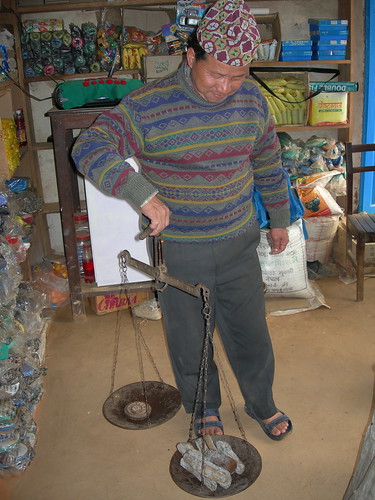
My last post presented a little snippet from a Cellphone policy from Montgomery School District. Essentially it said no phone/mobile device should enter or be used here. The policy was written perhaps four years ago and could have been seen as a safe move given what the perceived possible contribution to learning compared to possible issues unacceptable use might raise. The balance is tipping at lightning speed (and forever) with devices such as the ipod touch, iphone,  android devices, netbooks etc. Their possible contribution is real contribution. Weighing out chirpi on a balance scale by Parahamsa.

I have said and have to repeat that management issues aside we are forgoing an opportunity to learn to be better; to move into a new paradigm rather than just admire it from afar as the kids get on with it. The steps we need are bolder and quicker. Schools are slowly coming round to the idea of 1to1 provision and here it is in an ipod touch for $300 New Zealand Dollars. The video below looks at the experience of a school in the U.K.

A Safe Step may be to allow these touch devices which though not a phone are all but and use our schools wireless networks for connectivity. The next generation will undoubtedly have cameras and mics making them a reasonably solid platform for learning especially once a few apps come down from the appstore. What I think we need to realise fast is that we if we converge some of the functionality we have been get elsewhere into one of these devices they are not as expensive as they first seem.

This to me is one device format that we will see in almost everyone’s future and generally it will contain a phone as well.

These devices will undoubtedly enable learning, save lives and change lives.

Are we big enough to let them change our schools?

When will we let this take place?

Here are some of the things an iPhone can do today. This is a small selection There are 100,000 apps in the store many costing $0.99 making opportunities nearly endless.

Camera image $100
Torch image $20
Notebook image $5
GPS image $200
stopwatch image $20
media player image $60
Games console image $400
Mapbook image $10
Spirit level image $20
TV image $100


Others may not agree but a mobile device that has iPhone capability is a point that will soon be achievable for more of the population than having their own pc ever was. To me the important thing is that it will be personal and so will the learning.

Mark Prensky is debating should we give a four year old an iPhone?

Some other links

Elsewhere we can find out about 5 (Free) iPhone Apps Every Parent Should Have.

Exams  phone a friend

Thursday, September 24, 2009

Networking for 1 to 1

Page_1 

With future posts I will look at pedagogy but this post will consider networking and it’s implications. The reason being that often people don’t understand the implications of adding more devices onto their networks, where the bottlenecks are etc. I hope that this post will make some of it easier to understand and help those making decisions for 2010. Otherwise we may hear this type of talk…

“We have got a whole lot of netbooks and all of  sudden the network seems awfully slow.”
”We used to have good internet and now students are waiting a long time for simple things to happen.”

There are large implications to increasing client density on our school networks (these are not just about our internet connection but internal also). 
What do we need to understand, do to create and maintain a network suitable for 1:1 student use?

5 Big ideas

  • The Network is now the most important part of Schools learning technologies infrastructure
  • Network contains 4 main components – Internet connection – Backbone – Network Layering (segmentation) – Wireless Access
  • These components have to match with client (device) density if the users experience is to be a good/successful/meaningful one
  • Wireless access is the only suitable way to deliver ubiquitous/natural learning technologies
  • "the value of a telecommunications network is proportional to the square of the number of connected users of the system" Metcalfe's law ie the more people connected the more learning the more opportunities.

A closer look at these

The Network is the most important part of the Schools learning infrastructure

It used to be that schools spent their money preparing servers to host mail, files and programmes. Now much of this functionality is moving to places outside the school. Schools are pooling forces to consolidate these like Nayland College who share a server with Nelson Girls. Network connectivity is the key to this. For a school to host the increasing number of devices that are being plugged in; or to enjoy wireless networking attention to this is important. In our school over 250 more devices are connected this year than last. Next Year and additional 230 are predicted. It could be  a bit like trying to fit a cities traffic down a normal road if we don’t take a few crucial steps.

 image

The Four Main Components

Internet
As shown above High speed internet to maintain service levels if we connect more devices to our network. Jetstream is not able to put information from our schools onto the internet nearly as fast as it can bring it down so when more of us want to use web 2.0 tools we will struggle to do so.

Backbone
The connections between buildings and switches (think old telephone exchanges) is our backbone. Fibre optic cables and fast switching are needed if we want to avoid bottle necks and teacher frustration.

Network Layering
When a computer or other device on a network wants to talk to another one it can happen in number of ways. In most school networks traditionally the device would ask all of the others if they were the right one ie send its message everywhere in a hit and hope type exercise. This was not such a problem when there were a small number of devices involved but now there are hundreds it can make things noisy and slow. To speed things up we can segment a network (make it layer 3) and send the traffic directly to where it needs to go. The important message here is to use layer three capable switches in our networks.

Wireless Access
The most difficult to get right but the most important in many ways because this is the where connections to the network for 1:1 devices will start. Schools need enterprise level wireless to manage 1 to 1 devices. A good system will be characterised by a central wireless management unit. What this does is ensure that access points are not competing with each other and that clients are handed on seamlessly from one to another.

The match to Client density
More devices = more bandwidth required for the same experience. Work using local software if the network can’t support multiple online users.

The value of 1:1 has come from the value of the network ie the value of connectivity.
We need to get our network environment right for the value of connectivity to show through. My next post will be a reflection on the realities of pedagogical (teacher readiness) for 1:1

For a look at the ideal world of a 1:1 implementation read this on Wesley Fryer’s Blog and then read the comments which allude to a hardware environment being funded but teacher readiness not. To get teachers ready is a more complex process than getting the students and their devices connected. In my mind we jump across and action research our way to individual teaching success. See easy isn’t it?

Tuesday, September 22, 2009

Students View

What some students thought when asked if schools should go 1 to 1. They were also asked what they were proud of in their use of a Netbook. Interesting to me were that they all had different personal ideas on this and that their reasoning for why was based on sound ideas rather than the gadget factor.

Saturday, September 12, 2009

Purchasing/maintenance Questions for 1:1 programmes

Having been through a year of 1 to 1 laptop use in our school I am preparing for a workshop at ulearn09 looking at what schools need to prepare for 1 to 1 learning. Many people will be seeing this as a simple transition to a greater density of devices on their networks. The best way for us to decide and think about this is probably to consider the implications of future events. The following are discussion starters for some important questions in this process.

  • We have got 50 devices and over half of them are having a problem with not starting up properly what should we do?

  • We can get a high power laptop for the same price as a netbook that should be better?

  • What are the hidden costs of this programme? are there any?

  • Should the parents/students be able to bring any laptop of their choice?

  • The device choice is not too important most devices today are of a good quality let’s just get on with it?

  • A parent is able to secure a good deal on a netbook for us should we take it?
  • And the answers are…
    Well ok No answers but there is no doubt these are important questions. We have had to increase our network support in-house to accommodate this. We purchased a very robust looking computer the classmatepc. We have 130 of these being used by year 7 students who take them home and we have had dealt with one issue that effected over 50% of these. So the two Big Answers To Purchasing and maintenance…

    image

    • a warranty for three years
    • proven track recording the student space
    • nothing that can be pulled off
    • has protective bag
    • no point of stress eg tablet with only one central hinge
    • battery guides so pins cant get bent
    • a sturdy mechanism for where the power cable from adapter will go

    And

    image

    • understand the supply chain
    • ask for an open book submission which shows cost from manufacturer
    • look at what added value they can provide
    • will they attend information evenings
    • how will they prepare the units for you
    • manufacturer has an online knowledge base with forums, usergroups etc

    Possible scenarios that might make sense

    If you do not have on site tech support provide a service where the device can be dropped off at the schools reception desk and picked up by supplier from there.

    If you need tech support to be managed by parents the information evenings and


    Here is an example of an RFP (request for proposals) that may help you if you want to use one.

    Rfp Netbook Template