
My Mum -- Dorothy Winter -- Was a teacher She Motivated me to be a life long learner. The pics in this header show her as a young school girl - to teacher. I will be educhecking in her honour here at educheck.blogspot.com
Wednesday, September 10, 2014

Tuesday, August 26, 2014
Wednesday, August 20, 2014
Tuesday, August 19, 2014
Leading a way forward
We often see leaders struggle to know how to get to where they want to be if it means change from the status quo. Trends emerge and new ideas seem to be taken up by different schools but it is easy to miss the boat. It is easy to see where its heading but have not been on the first sailing.
One of the most effective ways I see to lead effectively take aspirational future looking trends like those brought to us by Core Education and look at them through an action orientated lens like the elearning planning framework. The framework can be used in many ways in this case it identifies some different domains for action: Leadership and strategic direction, professional learning, teaching and learning, technologies and infrastructure and beyond the classroom. The resulting ideas can form the basis of effective implementation plans and strategies.
Doing this with others makes it more powerful and well considered.
At a leadership sharing session We looked at two of the 10 trends (Learner orientation and networked organisations) watched introductory videos produced by CORE and discussed them using them the elearning planning framework as reference frame. Here are some of the action imperatives we saw that would empower and enable schools.
Learner Orientation
 |
“It’s helpful to think of learner orientation in two ways: firstly, how does the learner orient themselves toward learning? And secondly, how does the school and community orient themselves towards supporting that learner?”
|
Now looking at this with the different elearning lenses pics of notes taken
Leadership and strategic direction
- Leadership needs to be seen to be learner orientated in staff meetings
- brain research into things such as self regulation - help understanding as to how we can orientate towards learners
- Need to try to connect learning areas to bring authentic learning
- We need to know our students observing how they learn outside of school
- We need to know our students getting their feedback feedforward
- We need to know our students collaborating directly with them
- High levels of futures thinking
Professional learning-
- Need to have a variety of this with a pedagogical focus
- Have learners present ie clear inquiry into learning as it takes place classroom opportunities to observe learning and learning design
- Collaborations with other schools
- Able to provide access to this 365/24 online/blended components aligned with school learning kawa/protocol
Teaching and learning-
- Relationship with the students is paramount
- Diversity in acceptable evidence of learning
- Use of authentic learning inquiries with real world impact
- consistent language of learning eg (thinking maps, habits of mind)
Technologies and infrastructure-
- Need to have open networks and technologies
- Visible learning through the use of web spaces and environments.
- Use of online forms and aggregatable data to inform learner orientation
- Web research to assess preferred futures
Beyond the classroom-
- Have a whanau orientation - work with the things that have their buy in
- And example of this is to show how they can feed students learning into their own network constructs. Dorothy Burt at Manaiakalani has shown parents how to feed their students blogs into their facebook streams.
- Provide opportunities for parents to experience the same learner orientation their students do with learning happening in the same way.
- Take the school to the community represent the school outside of the school.
Networked Organisations
 |
David Rogers(link is external) describes networked organisations as:
|
Leadership and strategic direction
- Leaders need to let go and empower everyone to take ownership
- Identify multiple networks and cultivate them
- Try to be clear about the two way nature of networks ( the give and get)
- Position and present clearly outside of the organisation
- Utilise social networks and other connected environments
- Make networks accessible to the community
Professional Learning
- Associate with educational networks (VLN, GEGnz, edchat etc)
- Participate in regional learning networks and localised clusters
- Acknowledge networked learning opportunities for staff professional learning
- Provide information as transparently as possible to allow for access
- Promote and work with
Teaching and Learning
- Connect learners to others outside of the organisation
- Co-construct some learning with schools beyond our own
Technologies and infrastructure
- Use social Network tools: Facebook, Twitter, Google plus etc
- Provide systems that allow contributions to come from outside of the organisation
- Ensure that the capability of the network connection is
Beyond the classroom
- Try to find ways to ensure accessibility to the organisation for Whanau and that the learning is not solely relying on physical presence
- Familiarise parent with networked strategies
- Be aware of the connection strategies of others in the community
Sunday, June 29, 2014
Makerspace - learning for today
Here are some thoughts from some of the Makerspace sessions at ISTE 2014
The Makerspace website describes them "simply, makerspaces are community centers with tools."
The Makerspace website describes them "simply, makerspaces are community centers with tools."

Many Schools are looking to provide such a space for learning and making. As a developing trend/concept this seems to be changing over time.
A makerspace may not necessarily a physical room. It seems is to be about the idea that people learn when given the chance to build authentic projects.
- Boys see technology as a toy
- Girls see technology as a tool
- This has an implication for the making that takes place
- There is a relationship of making to project based learning
- We may be able to achieve more learning through the making challenge, motivation, and application to real problem solving.
- In terms of engineering and sophisticated electronics we need to chose carefully the age groups we present whole class challenges to.


- Autocad producing a new type of 3d printer
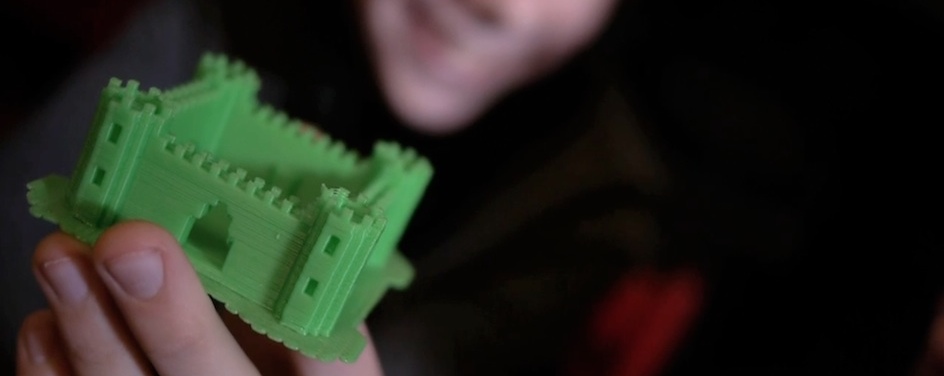
How to get started and get buy in
Products to use
- Start something small with a big buzz.
- Get the parents on board by having them experience making
- Have a student leadership group to help others
- Kids spear head collecting
Products to use

- Makey makey is under 50 a good mindset start point uses the computer as a keyboard. The website
- sparkfun arduino inventor
Places to learn
- coursera tinkering
- silvias super awesome
- Invent to learn
- Makerspace playbook
- fuse - north western tech illinois

Sunday, June 22, 2014
Working with others
Last Year I worked with Mel and her students to design an innovative sustainable toy for some younger students. I thought I would revisit this post which had been left a draft because I noticed something in the picture. The students are focusing on the from and probably try to listen as things are explained to them but they seem a little disengaged, lethargic almost.
The engaged photos are first and then the in classroom ones. Would be grateful for any ideas anyone out there has about how to change the way they saw the in class learning.


Throughout the building I was not sure we used the motivation of this relationship with the younger students enough. The Technology design was challenging in that students are asked to come up with a toy that hasn't been made before .
 |
| Hmm Focus |


Some ideas to up engagement are here...

Subscribe to:
Posts (Atom)